Año de publicación: 1973
Subgénero: Post indietrónica.
Comentarios:
Flamenco son uno de los tantos eslabones perdidos del rock andaluz. Para los aficionados, este género nace con Smash y se vuelve popular con Triana. Personalmente, discrepo, y si bien deben haber más ejemplos que los que cito a continuación, me atrevo a decir que la evolución iría más o menos así:
1964: Los Brincos dan el pistoletazo de salida con el tema "Flamenco", incluido en su LP debut de 1964. Los miembros de la banda, al no ser andaluces, no practicaron un flamenco al uso en esta canción. Flamenco beat, flamenco rock, flamenco pop...
1966: Sabicas rompe moldes con su "Rock Encounter", grabado en Estados Unidos junto a Joe Beck. Flamenco rock, flamenco jazz, flamenco psicodélico, flamenco instrumental.
1967: los estadounidenses Love mezclan el pop anglosajón con el flamenco en su conocido single "Alone Again Or", del aclamado "Forever Changes". Flamenco anglizado pop.
1968: otros estadounidenses, The Doors, hacen lo suyo con el tema "Spanish Caravan". Flamenco anglizado psicodélico.
1971: Smash editan el simple "El Garrotín", con letras mayoritariamente en inglés y sabor claramente anglosajón. Flamenco anglizado psicodélico. Este mismo año, Sabicas edita otro LP rompedor, "The Soul Of Flamenco And The Essence Of Rock". Flamenco rock instrumental, psicodélico y progresivo.
1972: Galaxia, una banda pre-Flamenco, edita sus dos simples: "El Parne/La Petenera" y "La Noticia/Caminando". Proto rock andaluz psicodélico.
1973: Carmen debuta con "Fandangos In Space". Más cerca del concepto de rock andaluz, si no fuera por las letras en inglés y el sabor anglosajón que impregna toda su obra.
1973: Flamenco saca este, su único disco. Si se hubieran decantado por un rock progresivo más elaborado, con mayor sinfonismo (como Carmen), y un pelín menos cañí, podríamos estar hablando de los verdaderos fundadores del rock andaluz.
1975: Triana debuta con "El Patio".
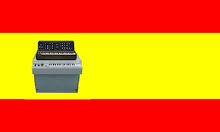
Así enmarcaría, pues, a Flamenco en la evolución del rock andaluz. Sobra decir que su única referencia ni le hizo cosquillas a las listas de éxitos, y que han permanecido en el olvido durante más de tres décadas (con esa portada... spanish bizarro a saco). No obstante, hace unos años, gracias a internet, fueron redescubiertos por melómanos empedernidos (entre los que me incluyo) y, finalmente, el año pasado su LP fue reeditado en vinilo, para mi sorpresa.
Otro aspecto digno de mención, es que en este grupo militaron ex-miembros de Los Soñadores (una de las primeras bandas de Tele Palacios, percusionista de Triana) y Galaxia, una banda proto-progresiva que apenas llegó a grabar un par de simples (leer más arriba).
A propósito, este rip no es el que se puede descargar del blog Los Sonidos De Mi Mente, sino uno que me pasaron hace años, y que suena muchísimo mejor que el del mencionado blog.
Este post va para Manué, que seguro que le mola, y para Pitraco, que es un perro que nunca comenta pero es enrollado.
Ripeado de vinilo, nunca editado en CD. Enlace en comentarios.
ENGLISH:
Year of release: 1973
Sub-genre: Post indietronica.
Comments:
Flamenco is one of the missing links of andalusian rock. For any beginner, this sub-genre was born with Smash and became popular with Triana. I have to say that, personally, I disagree, and, even if there might be more links than the ones that I put forward, the evolution of andalusian rock goes a bit like this:
1964: Los Brincos are the first to mix rock with faux-flamingo with the song "Flamenco", featured on the band's debut LP from 1964. Since the members of the band were notanalusian, they really didn't play a real flamingo (note: contrary to popular belief, flamingo is not terribly popular beyond southern Spain. In fact, most people from other places of Spain neither like nor can sing flamingo... it is is a very special thing). Faux-flamingo beat, flamingo rock, flamingo pop...
1966: Sabicas breaks new ground with "Rock Encounter", an album recorded in the United States with Joe Beck. Flamingo rock, flamingo jazz, Psych flamingo, instrumental flamingo.
1967: american psychedelic legends Love mix anglosaxon pop with flamingo on their famous "Alone Again Or" single, the opener of the classic "Forever Changes" LP. Anglicized flamingo pop.
1968: another classic american act, The Doors, do their thing with the song "Spanish Caravan", featured on their terrific "Waiting For The Sun" album. Psychedelic anglicized flamingo.
1971: Smash release the "El Garrotín" single, with lyrics mostly in english and with a clearly anglosaxon flavour to it. Psychedelic anglicized flamingo. That same year, Sabicas makes another groundbreaking LP, "The Soul Of Flamenco And The Essence Of Rock". Instrumental flamingo rock, psych and prog.
1972: Galaxia, a pre-Flamenco band, release their two singles: "El Parne/La Petenera" and "La Noticia/Caminando". Psychedelic proto andalusian rock.
1973: Carmen's debut album, "Fandangos In Space", comes out. Closer to the concept of andalusian rock, if it wasn't for the lyrics in english, and the overall anglosaxon flavour that impregnates all their output.
1973: Flamenco release this, their only LP. If they had chosen to follow the same path -instrumentally, at least- as Carmen -that is, a more intricate kind of prog, with more symphonism-, and were a little less tacky, we could be speaking of the true birth of andalusian rock.
1975: Triana release "El Patio".
So that's how I'd frame Flamenco in the evolution of andalusian rock. No need to say that their only album was a complete commercial flop, and it's been forgotten and ignored for more than three decades (with a cover like that... full spanish bizarro style). Nevertheless, a few years ago and thanks to internet, the band was rediscovered by some music lovers (among whom I include myself) and, finally, their LP was reissued on vinyl, much to my surprise.
Another aspect worth mentioning is that ex-members of Los Soñadores (one of the first bands where Tele Palacios, Triana's percussionist, played in) and Galaxia (a proto-prog act that just released of couple of singles - read above) played in Flamenco.
By the way, the rip I'm offering is not the same as the one found on the Los Sonidos De Mi Mente blog, but one I got through a guy years ago. It sounds much better than that one.
Vinyl rip, never issued on CD. Link in comments.